For a long time, luxury could be explained with a single word: brand. That word is no longer enough. People who pay more for a garment want to know what they are paying for: who made it, with which material, with which technique and how long it took. That question, once the concern of a niche, now sits at the center of the luxury conversation, and it has a name: ethical fashion.
In a market that produces more garments than it can sell, the product is not what is scarce: trust in its origin is.
What is ethical fashion?
Ethical fashion takes responsibility for the people involved in a garment: who raises or grows the fiber, who spins, dyes and weaves it, who cuts and sews, the conditions they work in and how their work is recognized. It is not a style or an aesthetic; it is a way of producing, and of telling the truth about what is produced.
Ethical fashion vs. sustainable fashion
The two terms are often used interchangeably, but they focus on different things. Sustainable fashion looks mainly at environmental impact: materials, water, energy, waste and durability. Ethical fashion puts people first. In practice they overlap, because neither is possible without traceability: knowing where everything comes from and who made it.
Why everyone is talking about a new luxury
The signals are coming from several directions at once, and they point the same way.
- Luxury is recalibrating. The State of Fashion 2026, by The Business of Fashion and McKinsey, describes a sector turning back to craftsmanship and client trust, after years of price increases that were not always matched by more creativity or better making.
- Clients want to understand the price. Industry analyses published in 2026 agree that luxury buyers now ask what justifies what they pay: provenance, craft, materials, time and technique.
- Experiences weigh as much as objects. According to Euromonitor's 2026 lifestyles survey, more than half of consumers prioritize spending on experiences.
- Travel is becoming a way to learn. 2026 travel trend reports highlight skill-based trips, including artisan crafts taught by local experts, and a shift away from high-volume tourism toward depth, context and care for the places visited.
- Regulation is pushing transparency. In the European Union, the Digital Product Passport is coming to apparel, with the European Commission planning to adopt the textile rules by the end of 2027. And since September 2026, generic environmental claims such as "eco-friendly" or "green" can no longer be used there without proof.
- Latin America is saying it in its own voice. Colombiamoda 2026 was held under the concept "Uniqueness is the new luxury". Across the region, handmade and traceable work is increasingly read as value rather than folklore.
None of these signals predicts the end of traditional luxury. They say something more useful to designers, brands and educators: origin has become an argument of value, and those who can prove it have an advantage.
Peru's advantage: an origin that already exists
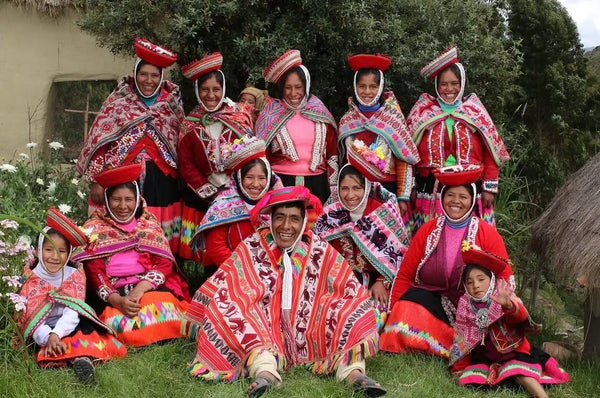
For many brands, traceability is a system that has to be built from scratch. In Peru, it is largely an inventory that already exists. Peru is the world's leading producer of alpaca fiber. Its Andean communities preserve spinning, natural dyeing and weaving techniques with centuries of history. And those techniques have names, territories and real people behind them.
The opportunity is not a purely visual, "Andean-inspired" print. It is turning that origin into contemporary, verifiable value: fiber that leaves Peru with a name, garments that carry a Peruvian signature and craft that is properly recognized.
How to turn ethical fashion into a real differentiator
Ethical fashion is not a label added at the end of the process. It is designed from the start, and a few decisions make the difference:
- Know the full chain. Which stages the brand does itself, which it buys and from whom. It is the first question of the Sistema Moda Chio Lecca, our framework for reading the fashion value chain, and the basis of any credible origin story.
- Name the makers. A community, a workshop or a weaver with a name says more than any adjective. Transparency is also a design decision.
- Design with communities, not just "inspired by" them. Agree, recognize and give credit instead of using their patterns as graphic references. Andean iconography belongs to the people who weave it.
- Value time. The time a handmade piece takes is part of its value, and explaining it is part of the brand's work.
- Prove what you say. Every claim about origin, materials or impact should be demonstrable. If it cannot be proven, it is better left unsaid.
Each of these decisions calls for design judgment. For more on that judgment, see the skills a designer needs to build a distinctive brand (article in Spanish).
Learn it at the source
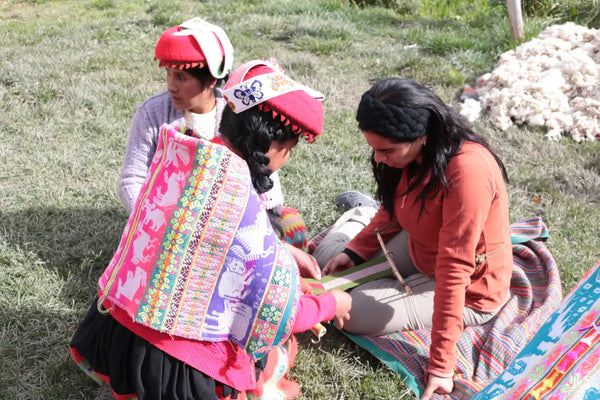
All of this is easier to understand where it happens. That is why our International Division runs the Andean Fashion Experience, a three- or five-day experiential textile trip in Cusco, Peru. Students, designers, brands and institutions from around the world spend time with weaving communities of the Sacred Valley, such as Patacancha, and learn first-hand how alpaca fiber is spun, how yarn is dyed with natural dyes and how cloth is woven on a backstrap loom.
The five-day edition is mostly taken by universities and design schools that travel as a group, and individual participants can join them. For a closer look at the techniques, see our guide to Peruvian textiles.
Frequently asked questions
What is ethical fashion?
Ethical fashion takes responsibility for the people involved in a garment: who produces the fiber, who transforms it and under what conditions they work. Its foundation is traceability: knowing who made what, where and how.
What is the difference between ethical and sustainable fashion?
Sustainable fashion focuses on environmental impact; ethical fashion focuses on people. They complement each other, and both depend on knowing the origin of what is produced.
Why is ethical fashion called the new luxury?
Because the value of a garment is shifting from the brand to what the brand can prove: the craft, the materials, the time and the people who made it. In a market with too much product, verifiable origin has become scarce.
Where can I learn about Andean textiles and ethical fashion in Peru?
On the Andean Fashion Experience by Chio Lecca Fashion School, a three- or five-day trip in Cusco with weaving communities of the Sacred Valley.
Can a university or design school organize a group trip?
Yes. The five-day edition is designed for institutions that travel as a group, and our International Division can also arrange longer or tailor-made experiences.
Further reading
Experience it in Cusco
The Andean Fashion Experience welcomes individual participants and institutional groups. Dates, itineraries and what each edition includes are on the Andean Fashion Experience page, where you can also message our international team on WhatsApp.