
(About us)
Chio Lecca exists so that Peru can have the fashion its history deserves
Since 1988 we have been developing talent, propelling brands and opening opportunities across the whole fashion industry. We started as a school; today we are an ecosystem of eleven units.
(Mission and vision)
What drives us and where we are going
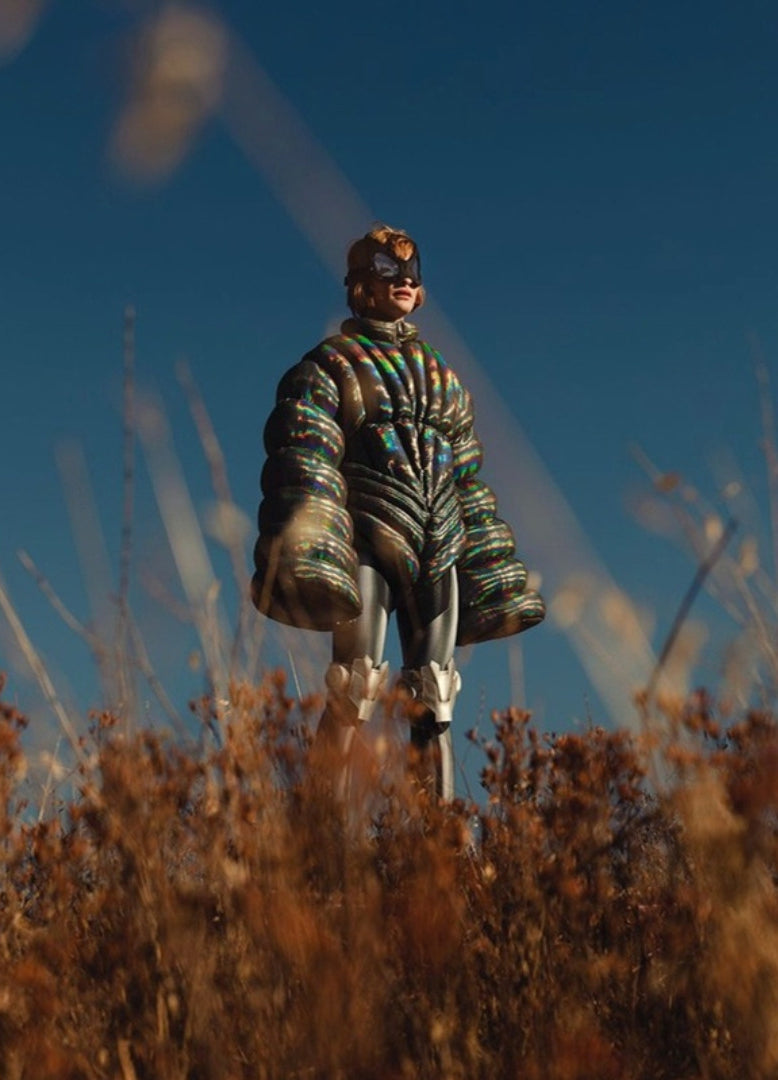
To develop talent and create opportunities that challenge the established, contributing to the growth of the fashion industry and to people's development, from an entrepreneurial, innovative and globally connected perspective.
To consolidate Chio Lecca as the leading driver of the talent, brands and opportunities that are redefining the fashion industry from Peru to the world.
(Our values)
Five convictions that guide what we do
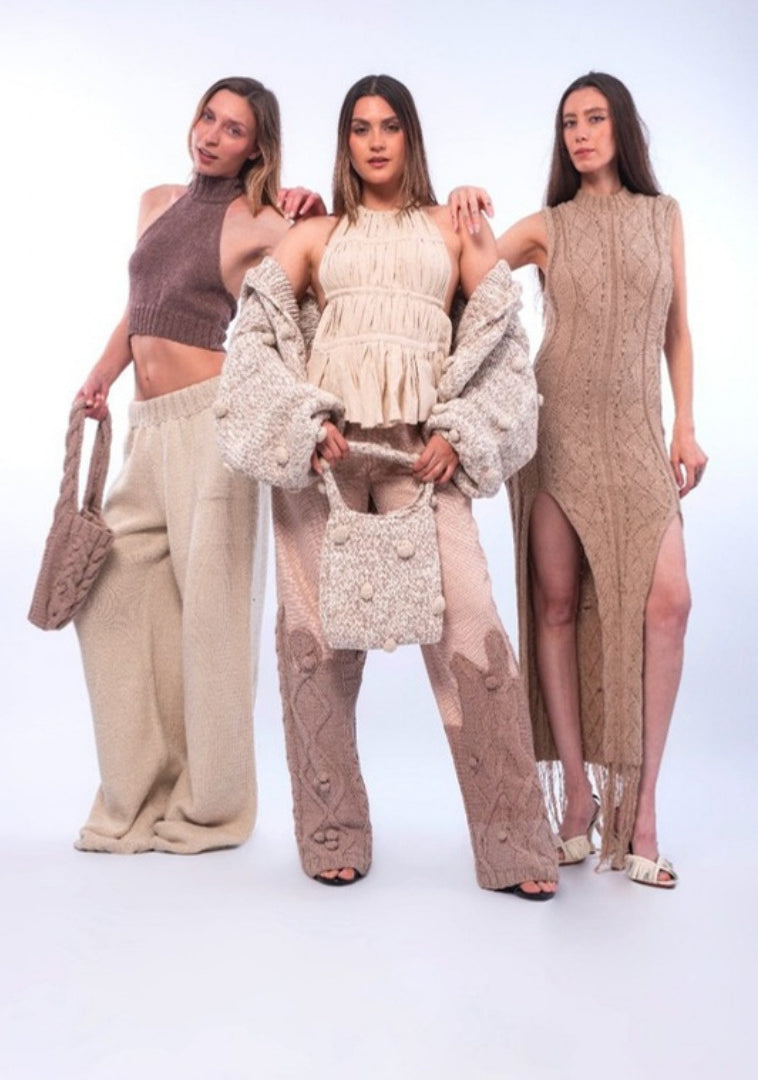
And, above all, what we decide not to do. They hold the same in a workshop, in a company or in a community of weavers.
- Passion with vision
Passion is the starting point; vision is what turns it into an opportunity before others see it.
- Entrepreneurial spirit
We turn ideas into projects that work and last. What someone creates with our support belongs to them.
- Impact and development
What we do must leave something in place: in a person, in a workshop, in a community, in the industry.
- Evolution and innovation
We take on what is new and let go of what no longer serves, in constant connection with the industry.
- Global connection
We take our people to the world and bring the world to our people.
(Where we come from)
Four students at a dining table, and everything that came after
- 1988The return
Rocío Lecca comes back from Italy and teaches four students at the dining table of a house in Jesús María.
- The beginningA country with no school
There was no fashion degree. Starting meant building something that did not exist.
- ThenWhat grew
First in territory; later, in everything a classroom cannot give.
- 2020The test
The pandemic took away the workshop. The house reinvented itself, as always.
- 2024The renewed license
The first fashion school to be relicensed.
- TodayThe handover
Gian Franco Castillo Lecca takes over the leadership. The house is run by two.
Chio is what people call Rocío. The monogram is a C that holds an L: a statement of origin.
(The world we see)
The world moved in our favor
We read it through verifiable sources and call each statement what it is: evidence, signal, scenario or opportunity.
- 01Talent no longer depends on location.
- 02The industry is moving toward short runs, nearby production and direct sales.
- 03Manufacturing technology has narrowed the advantage of scale.
- 04Artificial intelligence made execution cheaper and a point of view more valuable.
- 05The market demands truth, origin and durability.
- 06Here, traceability is an inventory that already exists.
(The principle)
When what is scarce changes, what is valuable changes
- Abundantinformation→Gains valueattention
- Abundantcontent→Gains valuetrust
- Abundantoptions→Gains valuecuration
- Abundantgeneration→Gains valuejudgment
Generating is producing possibilities. Creating is taking a stand on them.
(The future we choose)
Turning what Peru already has into value the world recognizes
We do not compete on volume. The future we prefer for Peru turns hard-to-replicate assets, such as fiber, craft and culture, into contemporary, verifiable and exportable value.
Sources: Ministry of Production and Instituto Tecnológico de la Producción (Peru).
Seven capabilities the future asks of talent
(The Chio Lecca Fashion System)
This is how we understand fashion. And this is where we teach it from
Nine connected links, four processes that run through them and four forces that transform them. The Sistema Moda Chio Lecca is the framework from which we observe, teach and evolve fashion.
Four external forces · they come from outside and must be read
- Technology and AIwhat is possible ↓
- Regulationwhat is allowed ↓
- Economywhat is viable ↓
- Culturewhat is valued ↓
Nine links · each with its verb
Raw materials
Verb: Obtain
Natural, artificial and synthetic fibers, and supplies.
Textile manufacturing
Verb: Transform
Spinning, weaving, knitting, dyeing, printing and finishing.
Research
Verb: Look
Consumer, market, culture and trends.
Design
Verb: Create
Concept, collection, color and product proposal.
Product development
Verb: Ground
Pattern making, prototyping, fit, technical specs and grading.
Production
Verb: Make
Cutting, assembly, finishing and quality control.
Brand and communication
Verb: Tell
Styling, art direction, content and experience.
Sales
Verb: Sell
Physical and online retail, wholesale, display and pricing.
Regeneration
Verb: Reincorporate
Repair, reuse, resale, recycling and reincorporation. What is discarded returns to raw materials.
Four cross-cutting processes · they happen inside all nine links
- Management and entrepreneurship
Planning, costing, leading and answering for results.
- Innovation
Trying better ways of doing things, in any link.
- Sustainability
Creating value for people and the environment.
- Learning
The system changes; whoever works in it never stops learning.
Chio Lecca Fashion School is present in all nine links: it develops talent for the entire Fashion System, from raw materials to regeneration.
Three industries coexist in the system: textiles produce material, apparel produces garments and fashion produces meaning and decisions.
(The ecosystem)
Eleven units, one shared impact
We started by teaching. Today we accompany people throughout their professional lives, along with the companies, communities and institutions that move the industry.
To develop talent that challenges and transforms fashion.
Explore →We developProjectsTo turn challenges into development opportunities.
Explore →We expandInternationalTo connect our talent with the world.
Explore →We partner and makeCompanies, Entrepreneurs and PartnershipsTo solve real needs through knowledge and talent.
Explore →We propelIncubaTo propel brands and ventures so they can grow.
Explore →We connectAlumni Network and Job BoardTo connect talent with relationships and opportunities.
Explore →We recognize and accreditLabor Competency Certification CenterTo recognize the value of knowledge gained on the job.
Explore →We transformChio Lecca FoundationTo transform lives by bringing opportunities where they are needed most.
Explore →We openScholarshipsTo open opportunities so talent can grow.
Explore →We integrateClub ChioTo strengthen a community that creates, shares and connects.
Explore →We dareInnova Fashion LabTo experiment and open new paths for the industry.
Explore →How we make an impact
- In the world
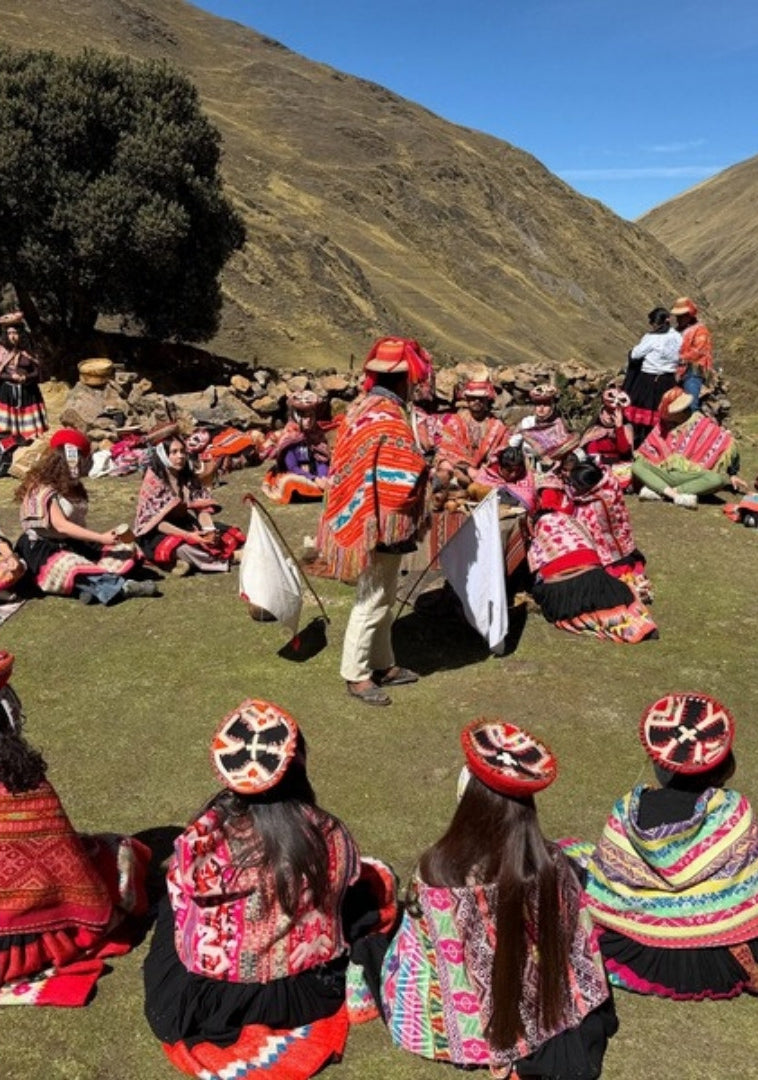
Peruvian talent working anywhere, brands with their own name abroad and institutions that come to learn from our textile heritage.
- In the country
An industry that gains design, brand, management and knowledge, and starts charging for what it gives away today.
- In people
A craft, an income, a document that proves what someone knows, the chance to study. People making a living from what they love.
- In the Fashion System
Change link by link: workshops with better standards and crafts that gain dignity.
Working together is not the units’ goal: it is the strategy through which the ecosystem fulfills its purpose.
(Graduate path)
Once the program is over, each graduate chooses their path
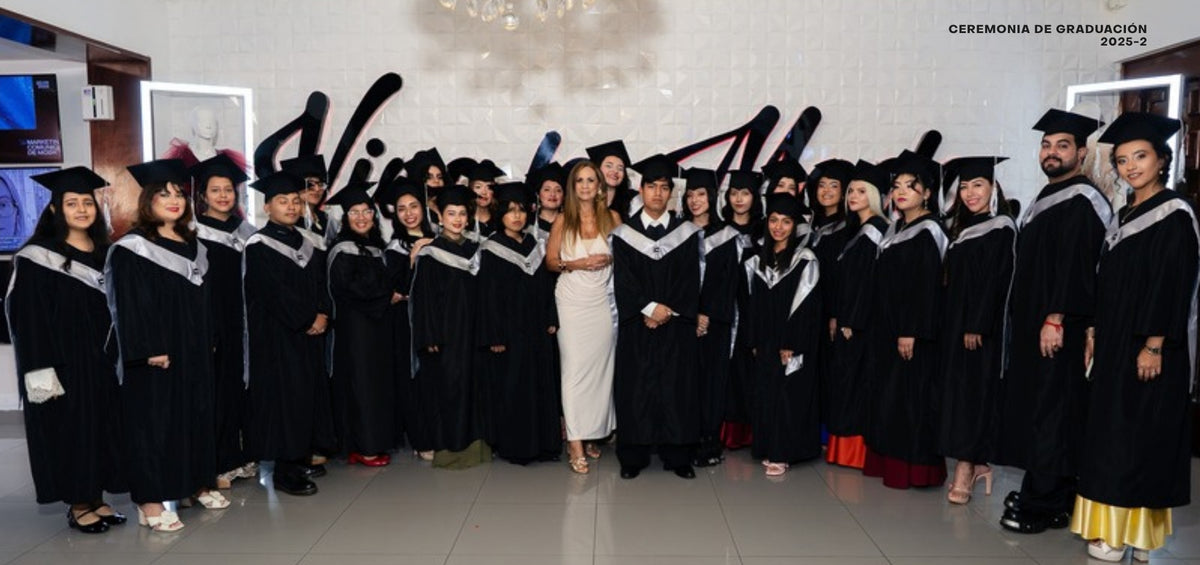
And walks it with support: finishing the Fashion Design program does not mean leaving the ecosystem.
(What graduates take with them)
Professional Technical Bachelor’s Degree in Fashion Design + Professional Technical Title on behalf of the Nation + 3 modular certifications
- Year 1Trend analysis and collection design
- Year 2Product development and prototyping
- Year 3Costing and quality control of fashion products
I want to keep studying
In Peru: USIL, two more years.
Abroad: Universidad de Palermo, in Buenos Aires, or Universidad Pontificia Bolivariana, in Medellín, in one to two years.
Programs with international partner institutions.
With the support of
I want to work for a company
An education ready for a professional career in the industry, across different fields of fashion.
With the support of
I want to start my own business
Three years of education with an entrepreneurial mindset to turn ideas into products, brands, services and projects.
With the support of
One modular certification for each year of study. Current agreements, subject to change.
(We keep working together)
Chio will always be part of this story. And every graduate, part of ours
- 01Alumni Network
Community, training and job opportunities.
- 02International
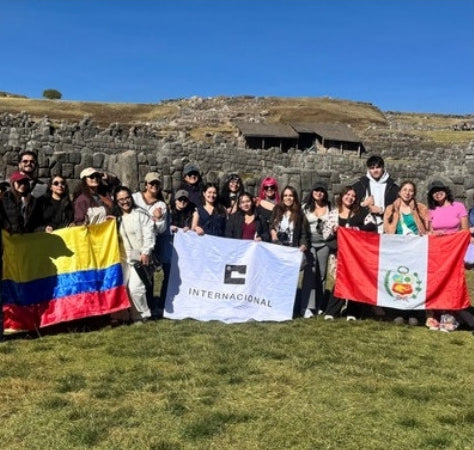
Experiences, internships, programs and international opportunities.
- 03Projects
Working professionally on projects with companies, institutions, communities and organizations.
- 04Companies and Entrepreneurs
New opportunities to collaborate within the industry.
- 05Innova Fashion Lab
Presenting ideas and exploring how to develop them together with Chio Lecca.
- 06Chio Lecca Foundation
Taking part with their talent in impact initiatives.
- 07Incuba
An idea, a brand or a business that wants to grow, supported until it becomes a project with greater potential.
- 08Chio Lecca Fashion School
Coming back as a professional or a teacher to share knowledge with new generations.
You graduate from the program. Not from the ecosystem.
(Chio Lecca Fashion School)
Where fashion takes shape
Peru’s first institution specialized in fashion, since 1988. Its purpose: to develop talent that challenges and transforms fashion.
Six scales of education, each for someone different
Three years, six semesters, day and evening schedules. Bachelor’s degree and professional title on behalf of the Nation.
See the program →02 · Comprehensive programsA complete craftFashion Design, Production and Technology, Tailoring, Footwear, Bridal and Evening wear.
See programs →03 · SpecializationsFor practitionersPrograms to go deeper into a field of fashion and of the Fashion System.
See programs →04 · Workshops and short coursesSomething specificConcrete techniques and topics, in a short format.
See programs →05 · TrainingOne day, one topicFull-day sessions, also tailored for companies in the sector.
See programs →06 · Kids and TeensTalent shows earlyCreative education for children and teenagers.
See programs →On campus, online or blended. And free training for the sector: Impulso Textil ↗
Fashion Design
Three years, six semesters, day and evening schedules. Professional Technical Bachelor’s Degree in Fashion Design and Professional Technical Title on behalf of the Nation.
- 120 credits
- 63% hands-on practice
- 17 career fields
- 6 collections
Across all nine links
The school develops talent for the entire system, from raw materials to regeneration. And afterwards, for those who want it, university: the program can continue in Lima, Buenos Aires or Medellín.
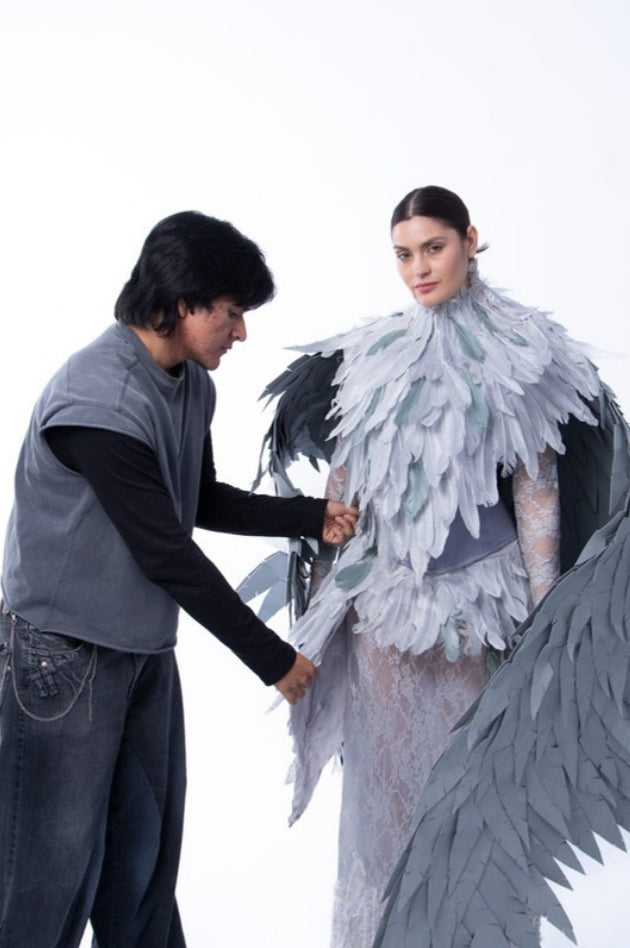
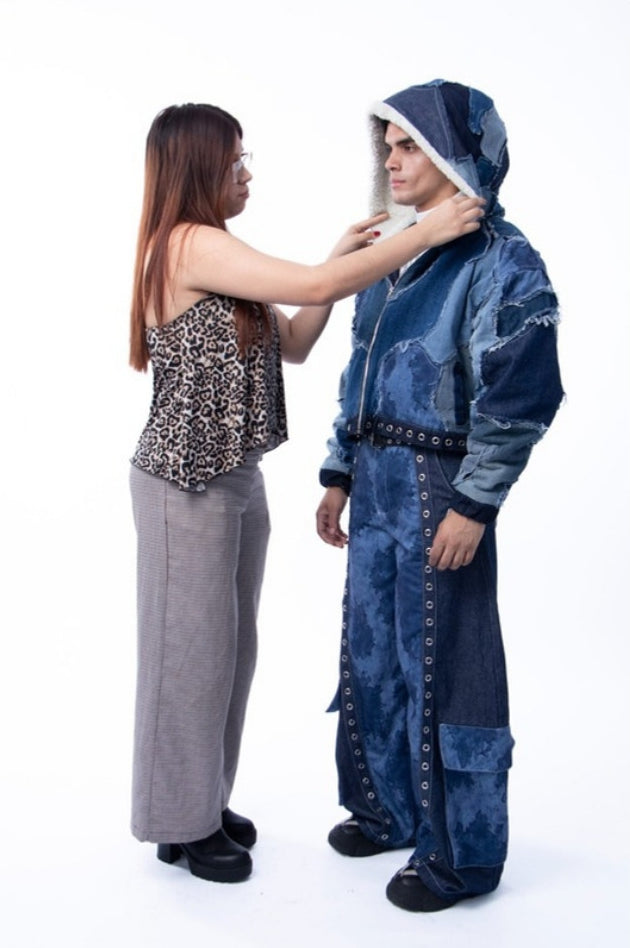
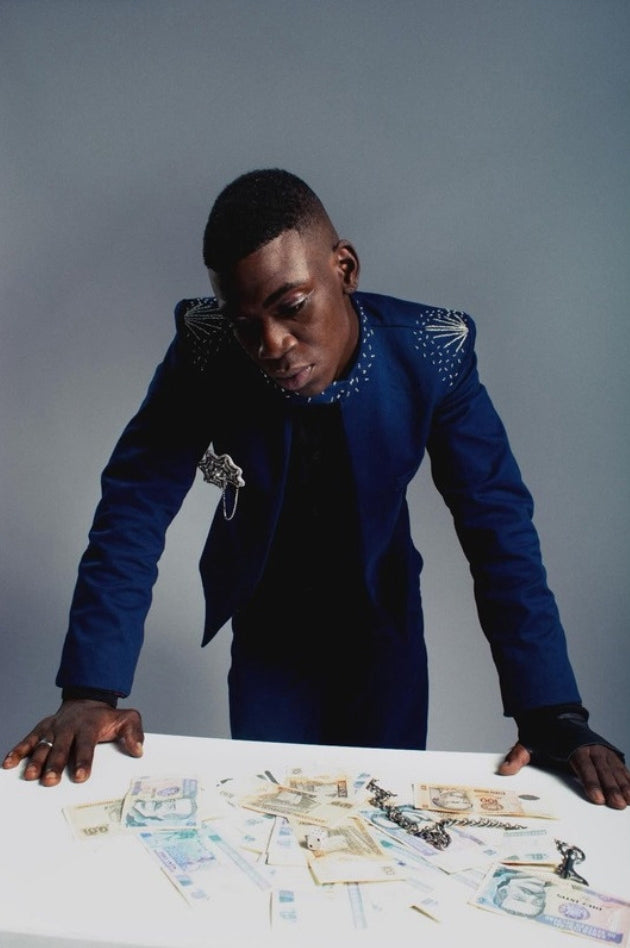
- Textile industry
- Apparel industry
- Fashion industry
What we believe
- Fashion is an industry
- Talent is not enough
- Designing is thinking
- Authenticity costs, and pays
- Entrepreneurship is part of design
- Peru is not a limit
- No one learns alone
- Knowledge matters when it improves other lives
(Academic innovation)
Fashion never stops evolving. Neither do we
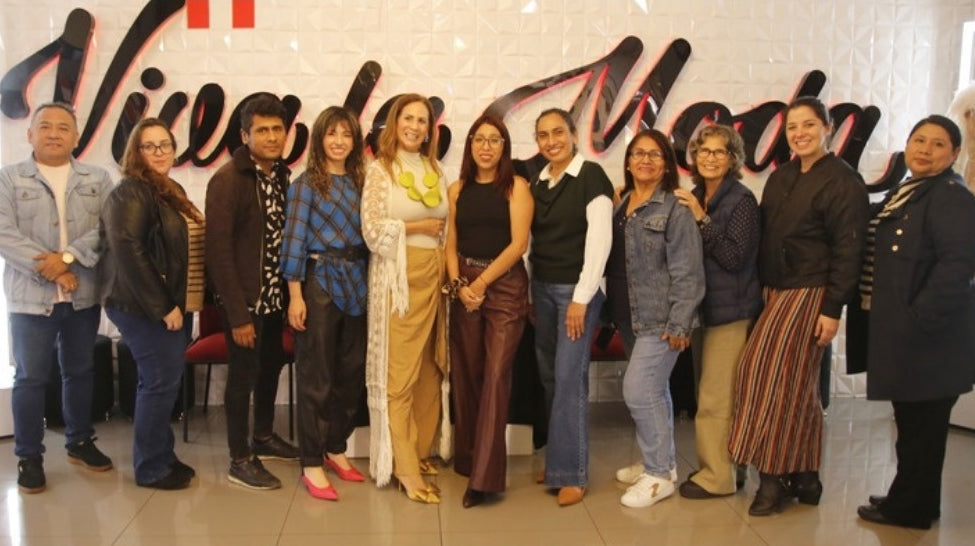
Educating for an industry in constant transformation requires staying connected to what is happening today and attentive to what is coming. That is why our education is always evolving.
How do we stay ahead?
- FacultyFaculty connected to the industry
Professionals working in the sector who bring into the classroom what is really happening in fashion, with an annual faculty training and update plan.
- IndustryWe listen to the industry
Working groups and ongoing ties with companies and players in the Fashion System: new needs, profiles and ways of working.
- WorldConnected to the world
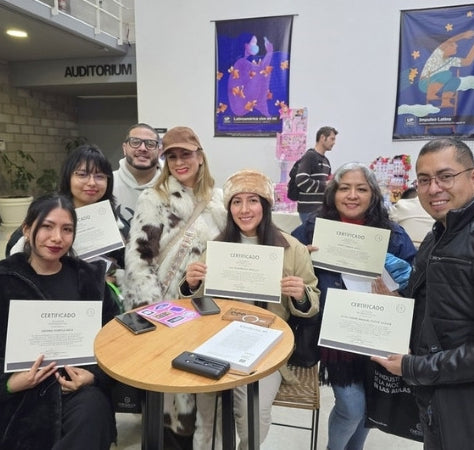
Agreements, knowledge exchanges, international experiences and internships: other institutions, markets and ways of teaching fashion.
- TechnologyTechnology to learn by doing
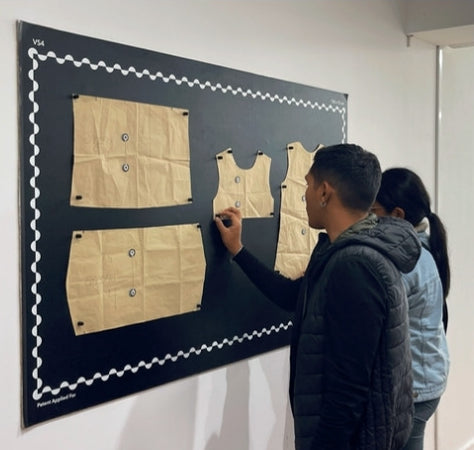
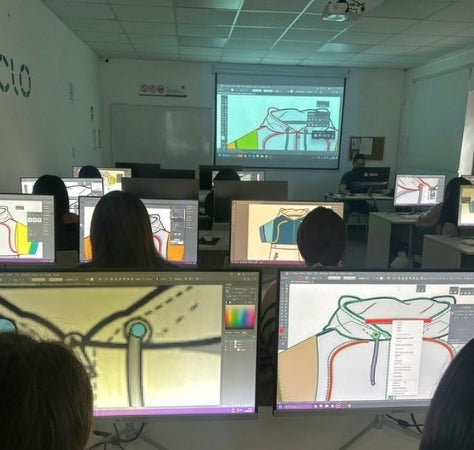
Digital fabrication, design and pattern-making software, platforms, machinery and specialized facilities. We adopt them when they help us learn, create and work better.
- AIArtificial intelligence, with judgment
Understanding its possibilities and limits, without handing over creativity, judgment, authorship, technical knowledge or the ability to decide.
Education in constant evolution
- Observe what is changing
- Understand it
- Decide what adds value
- Bring it into the classroom
Setting the pace is also a responsibility
Being the leading reference in fashion education in Peru requires us to keep moving forward, questioning how we teach and opening the way to new ways of educating professionals.
Innovating is not chasing every novelty. It is understanding what is changing, deciding what adds value and bringing it into education before it stops being the future.
We do not teach fashion as it was. We prepare for the fashion that is coming.
(Institutional network)
Some of the institutions we work with
Universidad de Palermo · Istituto Marangoni · Istituto Europeo di Design · Istituto Secoli · POLI.design, Politecnico di Milano · LCI Barcelona · Seneca College · INACAP, among others
Universidad San Ignacio de Loyola · Pontificia Universidad Católica del Perú · CODITEX · Universidad Nacional Mayor de San Marcos
MTPE · PRODUCE · MINEDU · PRONABEC · FONDOEMPLEO · MINCETUR · Municipalidad Metropolitana de Lima
IDB · World Vision Perú · CESVI · Global Humanitarian · ANIQUEM
Sociedad Nacional de Industrias · Cámara de Comercio de Lima · Perú Fashion Week · Expotextil Perú
Falabella · Ripley · Sony · Puig · Incalpaca · Textiles del Valle · Compañía Industrial Nuevo Mundo, among others
Partner institutions in 11 countries
(The principle of the house · Crear para Desafiar)
Create to Challenge
- Not to break things for the sake of it.
- Not to follow trends.
- Not to repeat the known.
We create to challenge our own limits, question the established and build solutions with knowledge, responsibility and purpose.
(Frequently asked questions)
What people ask us most about Chio Lecca
Since when has Chio Lecca existed?
Since 1988. Rocío Lecca began by teaching four students in a house in Jesús María. Today we are an ecosystem of eleven units, based in San Isidro, Lima, with 38 years of experience.
Is Chio Lecca only a fashion school?
No. Chio Lecca Fashion School is the unit that educates. Alongside it work Projects; International; Companies, Entrepreneurs and Partnerships; Incuba; the Alumni Network and Job Board; the Labor Competency Certification Center; the Chio Lecca Foundation; Scholarships; Club Chio and Innova Fashion Lab.
What is the Chio Lecca Fashion System?
It is the framework through which we read the industry: nine links, from raw materials to regeneration, four cross-cutting processes and four external forces. It helps us decide where to act and develop talent for the entire industry: Chio Lecca Fashion School is present in all nine links. It was authored by Gian Franco Castillo Lecca.
What qualification does the Fashion Design program award?
A Professional Technical Bachelor’s Degree in Fashion Design and a Professional Technical Title on behalf of the Nation. The program lasts three years, over six semesters, with day and evening schedules.
What other programs does Chio Lecca offer?
Besides the Fashion Design program: comprehensive programs, specializations, workshops and short courses, training and Kids and Teens, on campus, online or blended.
Can graduates continue to a university degree?
Yes. The program can continue in Lima, Buenos Aires or Medellín, with partner universities.
Where is the campus?
Av. Javier Prado Oeste 1310, San Isidro, Lima, Peru. Phone: +51 1 221 5546.